

An amulet anointed a friend to take an Ascendancy sitting on the complete opposite side of the passive tree from where his character actually pathed, a node he could never reasonably reach with skill points alone, for the cost of two oils he had been vendoring for weeks without checking what they did first. POE Oils and Incubators: The Passive Tree Secret That No One Uses is not an exaggeration. Most players walk past both mechanics entirely, and the oil half specifically is one of the few ways to expand your passive tree beyond what your actual points can reach.
What Anointing With Oils Actually Does

Blight oil anointing starts with the source: Oils drop from Blight encounters, the tower-defense-style event that appears while mapping, and their real value has nothing to do with Blight itself once you understand anointing. Take an oil combination to Cassia and apply it to an amulet. The amulet grants the effect of a specific passive skill from the tree, allocated as if you had actually taken it, without spending a single point or pathing anywhere near it.
This is the actual passive tree secret that no one uses correctly: amulet anoint poe options let you take a Notable completely disconnected from your build’s normal pathing, something no other mechanic in the game does. This is exactly what hidden passive nodes poe players never normally reach look like in practice: a pure elemental caster can anoint a notable passive skill sitting deep in the physical damage section of the tree if that specific effect happens to synergize with their build, something entirely impossible through normal point allocation.
Rings, Prismatic Oil, and the Parts Most Guides Skip
Amulet anoint poe options are the priority, since ring anointing works differently and matters less for most builds, converting oil combinations into buffs for Blight towers specifically, useful if you are actively engaged with Blight content and largely irrelevant otherwise. Do not judge blight oil anointing as a whole by ring anointing specifically, since it is the narrower, more situational half of what oils actually do.
Prismatic Oil is where the real hidden value sits. Combining it into an amulet anointment grants passives that exist nowhere on the standard tree at all, hidden passive nodes poe players cannot get any other way, anoint-only Notables with no equivalent skill point version, some of which are considered build-defining in their own right. This oil recipe poe players chase requires the rarest oil tiers and only drops from Blighted and Blight-ravaged maps specifically, which is part of why so few players ever end up using them despite their strength.
Why Incubators Get Ignored and When That Is a Mistake
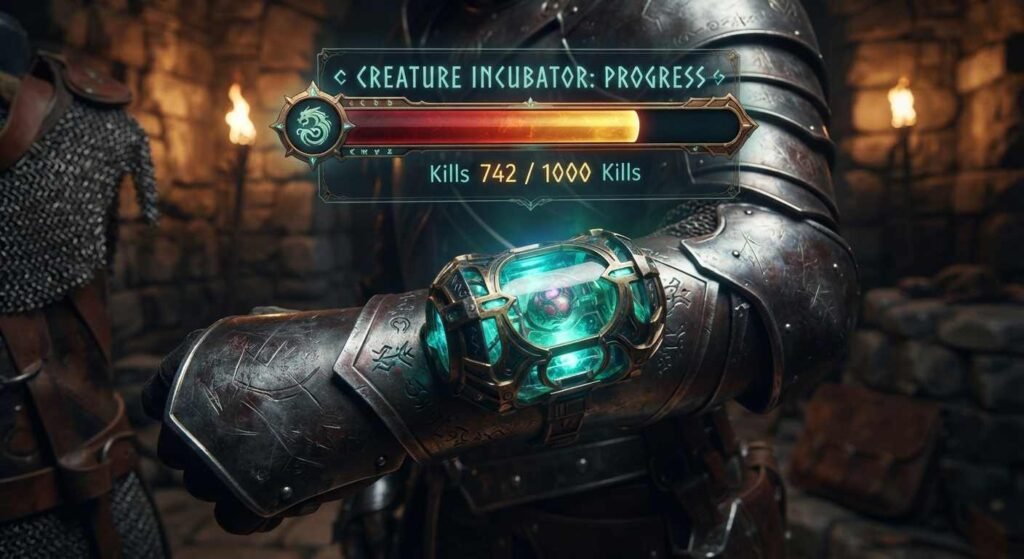
Incubator items poe players find work on a completely different principle: attach one to a piece of equipment, kill a specific number of monsters depending on the incubator’s type and item level, and a guaranteed item drops once the counter hits zero. They drop primarily from Legion encounters, and the overwhelming majority of players skip picking most of them up entirely.
That instinct is mostly correct. Most incubator types produce low-value guaranteed drops not worth the inventory space or the kill-counter tracking, and experienced players openly describe the bulk of incubator types as not worth picking up at all. But a handful are genuinely worth using: incubators that ensure high-quality gems, guaranteed six-linked items, or stacked decks specifically are considered worth the investment by players who track this closely, since the guaranteed outcome removes randomness from an otherwise unreliable drop.
This is the other half of the passive tree secret that no one uses fully. The mistake most players make is either picking up every incubator indiscriminately, cluttering inventory with low-value ones, or skipping the entire category after one bad experience with a weak type. Learning to recognize the small handful of genuinely valuable incubator items poe drops actually produce is worth the five minutes it takes, since applying the wrong ones costs nothing but the ones worth using can meaningfully accelerate a specific gear or manufacture goal.
Actually Using Both Mechanics Lacking Wasting Time
For blight oil anointing, the practical approach is simple: never vendor an oil you have not checked, since even common tiers combine into genuinely useful anoints, and keep a running oil recipe poe list of which Notables your current build would benefit from anointing. Hence, you recognize a useful combination the moment you have the pieces for it.
For incubators, apply only the specific types known to produce guaranteed high-value outcomes, gem-focused and six-link-focused types being the most consistently worth it, and skip the rest without a second thought rather than hoarding them hoping they might matter later. That is the whole passive tree secret that no one uses in practice. Neither mechanic requires deep investment to benefit from. Both require knowing which specific version of the mechanic is worth your attention, since both have a wide range between their weakest and strongest variants.
Quick Checklist — Using Oils and Incubators Correctly
- Check any oil before vendoring it; even common tiers combine into genuinely useful amulet anoints
- Use amulet anoint poe options specifically to reach Notables your build cannot path to normally.
- Treat ring anointing as a niche Blight-specific tool, not a general upgrade path
- Chase the right oil recipe poe crafting demands if you want access to anoint-only passives unavailable anywhere else.
- Skip most incubator items poe players encounter; community consensus is that the bulk of them are not worth picking up.
- Apply gem-focused and six-link-focused incubators specifically; they are the consistently valuable types.
- Keep a running list of hidden passive nodes poe players could reach through anointing that would benefit your build, so you spot a good anoint fast.
- Do not judge the entire oil and incubator system by its weakest, most situational components
POE Oils and Incubators: The Passive Tree Secret That No One Uses stays true for a simple reason. Both mechanics require a few minutes of upfront learning before they pay off, and most players never spend those few minutes, which means the secret stays a secret purely by default.