
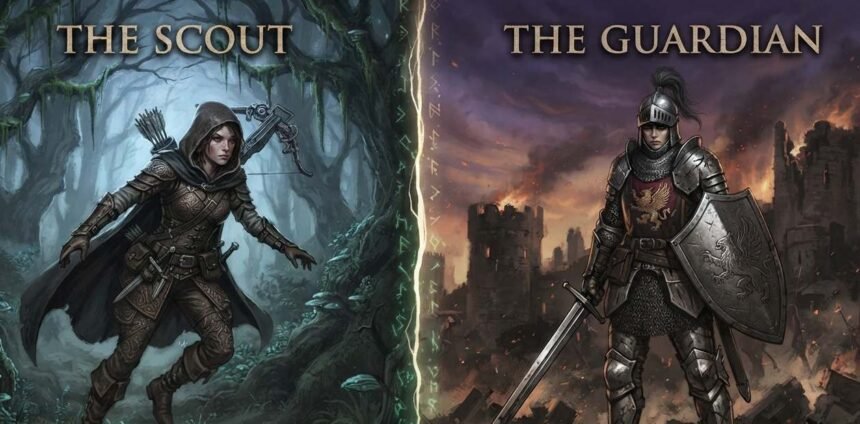
You cleared the campaign in nine hours, faster than anyone in your guild, riding a build that dumped every point into offense and none into defense. Tier 3 maps, first pack of magic monsters, dead. Building for league start vs endgame is not the same as wearing different gear; they are two different characters that happen to share a name, and the players who die the most in early maps are the ones who never noticed the handoff point.
Why League Start vs Endgame Builds Actually Diverge
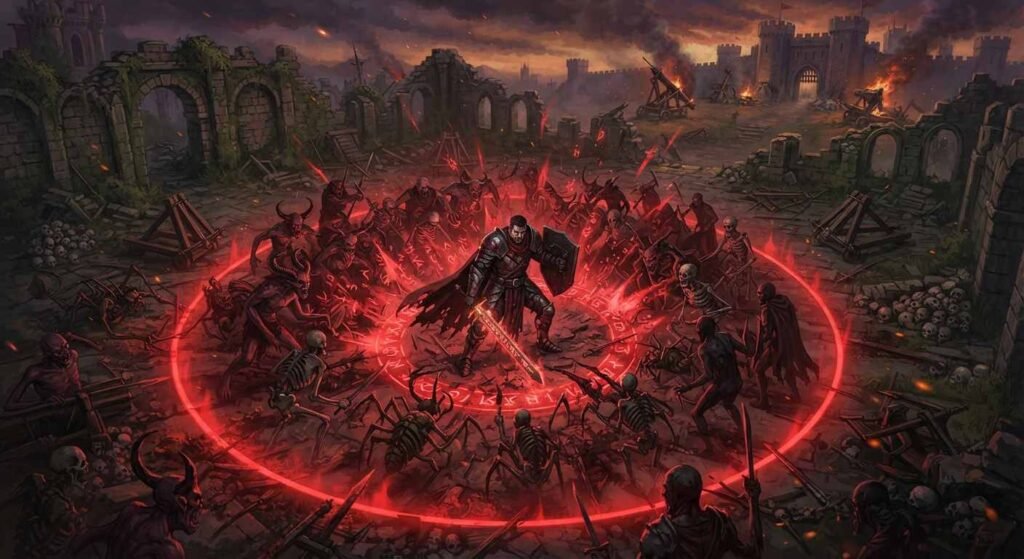
A proper league start build poe players can actually survive with is optimized around a resource nobody has yet: currency. The first hours of a league mean cheap gear, common uniques, and passive tree points spent on whatever keeps you alive well enough to keep clearing content quickly. Defense in this phase is minimal by necessity, not by choice, since the expensive defensive layers, high-tier resistances, capped chaos resistance, meaningful armor or evasion investment, are not affordable yet.
Endgame build scaling does not care why your defense is thin. Building for league start vs endgame means accepting that maps introduce enemy damage and mechanical complexity that a campaign-tuned defense genuinely cannot survive, regardless of how well that same build cleared Act 10. A rare monster with a screen-filling degeneration effect does not scale down to meet a fresh level 68 character’s health pool, and a build that never accounted for that fight is not unlucky when it dies there; it is behind schedule.
The Day 1 Build Death Spiral
Here is exactly how a day one build poe players lean on actually dies in maps, step by step. Damage output stays strong because offense was the entire investment priority through the campaign. Defense stays flat because there was never spare currency to improve it. This is endgame build scaling at work: map tier increases push enemy damage and density upward on a fixed schedule regardless of your gear. At some specific tier, usually somewhere between white and yellow maps depending on the build, incoming damage crosses the threshold your flat defense can absorb, and deaths start happening in packs rather than as isolated unlucky moments.
The trap is that this feels like bad luck the first few times. It is not. It is a structural mismatch between a build tuned for cheap early clearing and content tuned for endgame build scaling hypotheses, a character that has had time actually to gear. Poe build progression only works if you plan for this. Building for league start vs endgame requires planning the pivot point before you hit it, not diagnosing it after three deaths in a row to the same pack archetype.
Where the Pivot Point Actually Sits
The honest signal that you have crossed from league-start phase into endgame-build phase is not a specific map tier number; it is your death pattern. One or two deaths to a genuinely dangerous, unfamiliar mechanic is normal content difficulty. Repeated deaths to packs you have survived before, at a tier you have already cleared multiple times, is your defense falling behind your poe build progression, and that is the signal to stop pushing tiers and start redirecting currency into survivability.
Practical pivot triggers worth watching for specifically: your resistances are not capped, your chaos resistance sits deeply negative with no plan to address it, or your effective health pool has not grown since you left the campaign despite your character level climbing steadily. Any one of these on its own is a real gap. Two or more together is a day one build poe players are still running, starting its death spiral, whether or not you have actually died yet.
A concrete example: a character leaving the campaign around level 65 with roughly 2,000 effective health and capped elemental resistances can usually clear white maps safely. The same character pushing into yellow maps at level 80 with that identical 2,000 effective health pool, having spent every intervening currency gain on damage, is not underleveled; it is under-defended, and the yellow map monster damage tables were not built around a health total that stopped growing forty levels earlier.
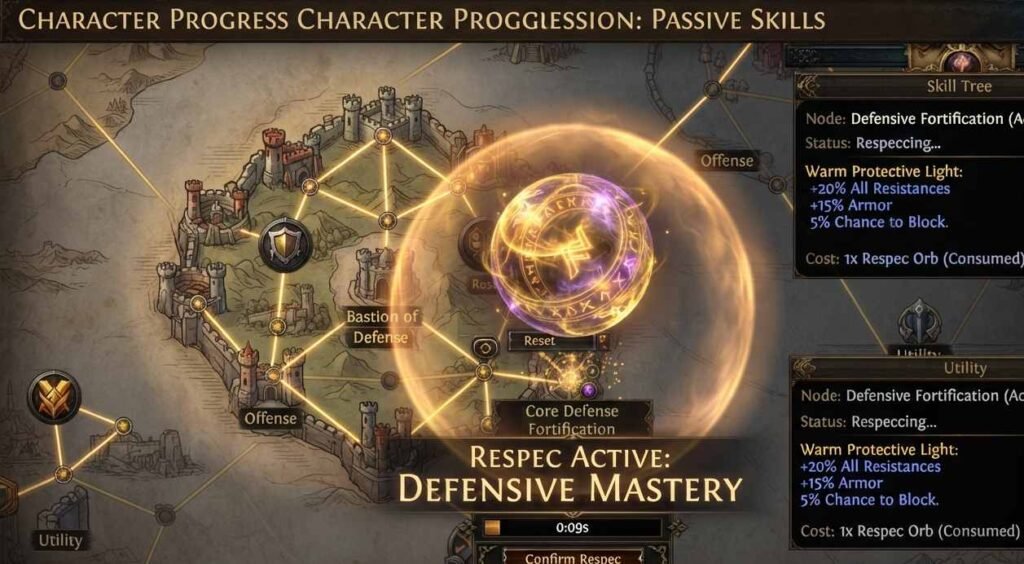
A respec strategy poe players can lean on here is legitimate, not a failure: respeccing early defensive investment back out once your currency improves. The simplest respec strategy poe veterans use is to spend a small amount of early currency on the cheapest available defensive layer, capped resistances first, since they are usually the cheapest meaningful survivability purchase in the game, then let your build’s real defensive identity develop once you can actually afford it.
Quick Checklist — Building for League Start vs Endgame
- Expect thin defense from any league start build poe players run in the first days; it is a necessary tradeoff, not a mistake to fix immediately.
- Track your death pattern specifically; repeated deaths to familiar content is the real warning sign.
- Cap resistances as the first defensive purchase once any spare currency appears.
- Do not treat campaign clear speed as evidence your poe build progression is ready for maps.
- Watch for a fixed effective health pool despite a rising character level; that gap only grows.
- Plan your defensive pivot before you need it, not after several deaths force the issue.
- Apply a respec strategy poe players trust and redirect currency toward survivability the moment map deaths start happening in clusters.
- Remember, a day one build poe players push into yellow maps unmodified was never actually finished, only fast through the campaign.
Building for league start vs endgame is really just being honest about which character you are actually playing this week. That is exactly what a league start build poe players lean on is supposed to do, and the build that got you through the campaign fast did its job. Asking it to also tank endgame packs without ever being redesigned for that job is where most day one builds actually die.