

A divine shrine poe players learn to respect, lit up on the minimap, and I ran toward it the way I do every shrine, assuming free power was free power. It made the monsters around it unkillable, and I nearly died in a swarm I could not clear for forty-five seconds. Shrine mechanics in POE are not uniformly good, and the game has never actually told you that clearly, which is exactly why players either grab every shrine on sight or ignore them entirely, both the wrong default.
What Shrine Mechanics in POE Actually Do
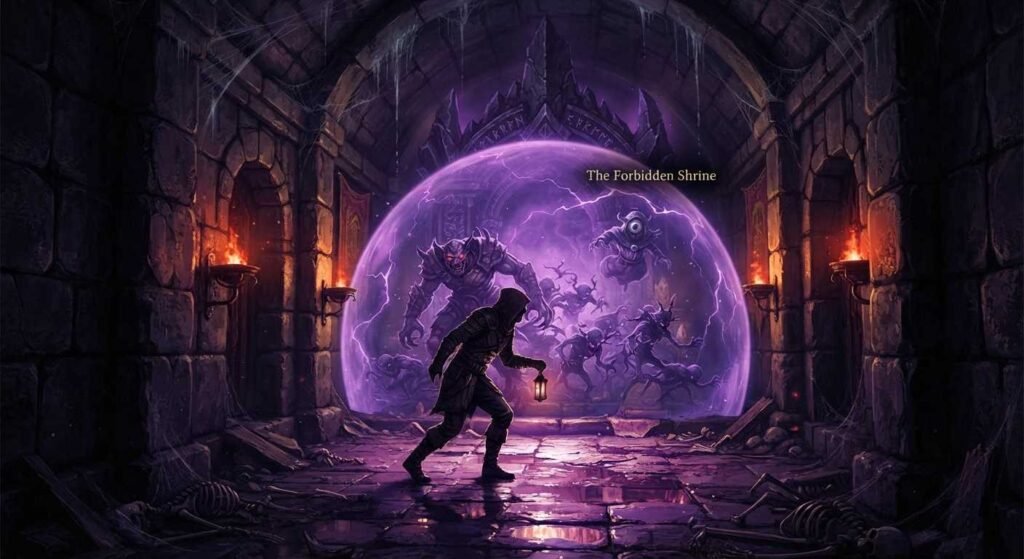
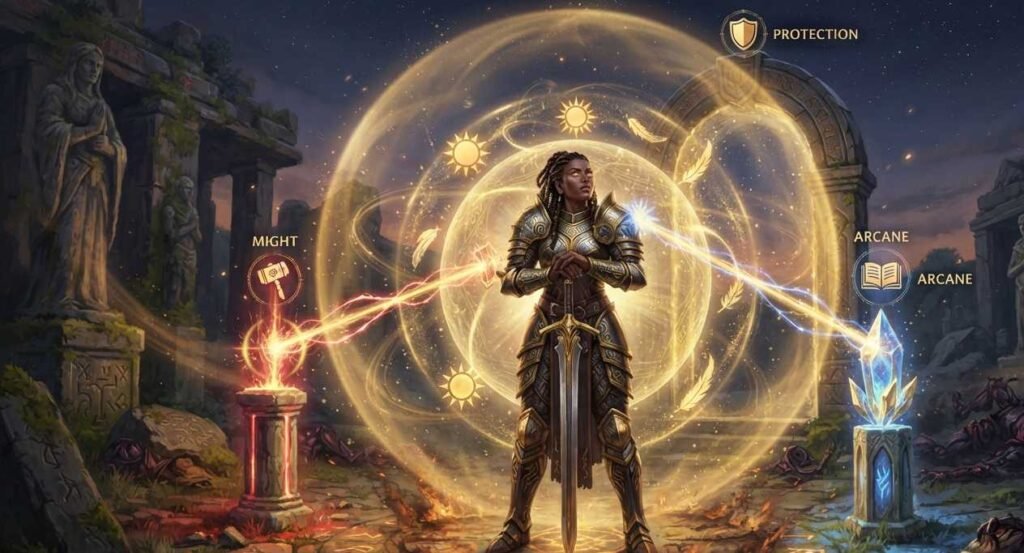
A shrine grants a temporary effect the instant you interact with it, lasting a fixed duration or until you leave the area, and shrine buff stacking has no limit, meaning you can hold as many different shrine effects active at once as you find. Among all poe shrine types, the split into two real categories matters most: Buff shrines grant buffs to affected monsters, players, the player’s nearby allies, and Spell shrines that cast effects around themselves independent of who triggers them.
This split matters more than it sounds like it should. A Buff shrine you grab is unambiguously good, strengthening your character for its duration with no real downside. Some shrines specifically buff monsters instead of you, and grabbing those without realizing what they do is how a normal pack turns into the fight your build was never prepared for.
Shrine That Actually Requires Caution
Divine shrine poe encounters are the clearest case of a shrine mechanic that punishes assumption. While active, monsters near the shrine become unkillable for its duration, which sounds like a debuff until you realize the game intends for you to use this offensively in specific setups, not accidentally trigger it while trying to clear a pack normally. Without a way to phase past or reposition around unkillable enemies, players who grab a Divine Shrine mid-fight can find themselves stuck taking damage from monsters they cannot remove for the shrine’s full duration.
This is the shrine mechanics in POE lesson most guides skip: not every shrine effect is purely beneficial to grab on sight, and the ones that are not tend to be the most visually similar to the ones that are. Checking what a shrine actually does before unthinkingly running into it, rather than after, is the difference between free power and a genuinely dangerous mistake.
Which Shrines Actually Matter for Real Builds
Most standard poe shrine types in the Buff category- movement speed, damage, defenses, are minor quality of life for the duration and rarely change how you approach a fight. They are worth grabbing when convenient and not worth detouring for, since their impact is real but small relative to your build’s actual power level.
Shrine build strategy becomes genuinely relevant with specific unique items designed around shrine interactions as opposed to standard mapping, and a real shrine build strategy treats those items as the actual foundation. Certain belts and other unique items convert flask mechanics into shrine-triggered effects instead, making what is normally a background bonus into a core part of how the build functions, with some builds relying on shrine buff stacking to scale effect magnitude high enough that a single shrine interaction meaningfully spikes character power for its duration.
Useless POE mechanics discussions online frequently lump ordinary shrines into that category, and shrines get cited as useless poe mechanics more often than almost anything else in the game, and for casual mapping that assessment is largely fair; most shrines do not matter enough to plan around. But calling shrines useless poe mechanics across the board misses both the Divine Shrine danger case and the dedicated shrine-build case, where the mechanic goes from background noise to genuinely build-defining.
How to Actually Treat Shrines While Playing
Reading shrine mechanics in POE correctly starts with a simple default: grab shrines you recognize as safe, standard damage or defense buffs, since the upside is real and the downside is effectively zero. Default to caution on shrines you do not immediately recognize, particularly anything with visual effects centered on nearby monsters rather than on your own character, since that is the visual signal for a monster-buffing or dangerous shrine type.
If you are building specifically around shrine interactions, check which unique items convert flask or defensive mechanics into shrine effects before committing passive tree points to the strategy, since this only pays off with the right supporting items equipped. For everyone else, treat shrines as a minor bonus worth grabbing opportunistically, never worth backtracking across a map for, and never worth grabbing unthinkingly without a half-second glance at what it actually does first.
Quick Checklist — Reading Shrine Mechanics Correctly
- Check a shrine’s visual effect before grabbing it; monster-buffing shrines usually center effects on nearby enemies.
- Treat any divine shrine poe encounter with real caution; it can make nearby monsters temporarily unkillable.
- Rely on shrine buff stacking freely; there is no limit to how many effects you can hold active at once
- Grab standard Buff shrines opportunistically; they are minor but actually free power.
- Do not detour or backtrack across a map specifically for an ordinary shrine.
- Learn which poe shrine types pair with specific unique items if you want shrine build strategy to matter for your character.
- Remember Spell shrines cast independently and are not affected by your own character’s modifiers.
- Reassess any shrine mechanics in POE you do not recognize rather than assuming they work like the ones you know.
Shrine mechanics in POE reward exactly one habit: a half-second check before you commit. Most of the time that check confirms free power. Occasionally it saves you from turning a normal pack into a fight your build was never built to survive.