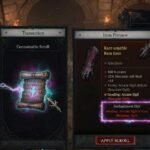

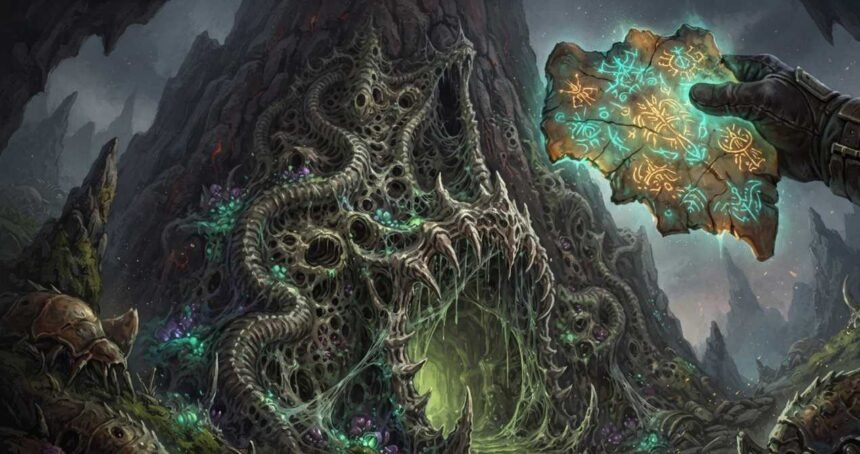
A single map fragment sitting in my currency tab was worth more than I realized because I had no idea it guaranteed access to content most players only stumble into by luck. The Hivebrain Gland economy changed how a meaningful chunk of the playerbase approaches high-tier maps, and the shift traces back entirely to what one specific fragment lets you control instead of leaving it to chance.
What a Hivebrain Gland Actually Does
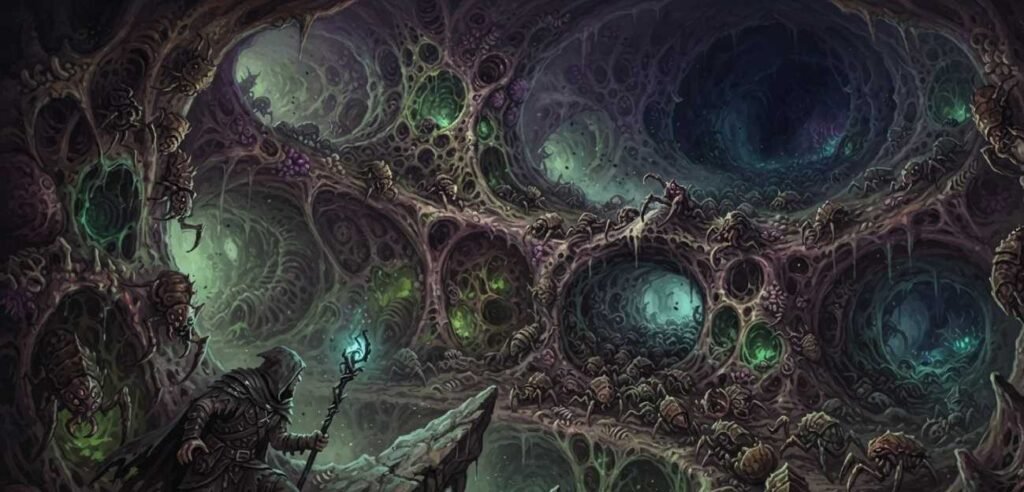
A Hivebrain Gland is a map fragment which, when placed in the map device alongside your map, guarantees the presence of a Hive Colony in that specific map. Without one, hive colony poe 2 spawns can still appear, but only randomly, and only in Tier 13 or higher maps, which makes them a genuine rarity for players not deliberately targeting them.
The Hivebrain Gland economy exists because that guarantee is valuable enough that players are willing to pay real currency for it rather than gambling on random spawns. A Hive Colony encounter is the gateway to the entire Keepers of the flame poe 2 mechanic, and controlling exactly when you get access to it, rather than hoping one appears, is what turns this piece from a curiosity into an authentic market commodity.
Where Hivebrain Glands Actually Come From
There are four real sources, and knowing all four matters to understand why the economy around this item behaves the way it does. Defeating Vruun, Marshal of Xesht, an Unstable Breach boss with a chance to appear when clearing Unstable Breaches, is one source. Clearing a Hive Fortress, a sub-area Breach encounter that can randomly appear in maps of any tier, is another, with a chance to reward a Hivebrain Gland on successful completion.
Each of these three farmable sources demands a different kind of investment. Hunting Vruun requires investing in Breach-focused Atlas passives and running enough Unstable Breaches for the boss to have a real chance of appearing. Farming Hive Fortress encounters instead rewards broader map volume over targeted investment, since the sub-area can show up in nearly any tier rather than requiring specific setup. Players without the currency or Atlas investment for either tend to default to the fourth option instead, buying outright, which is exactly the behavior that gives the Hivebrain Gland economy its actual trading volume.
Birthing a Mysterious Wombgift on the Mysterious Item Womb at the genesis tree poe 2 players build toward can also spawn a Hivebrain Gland, which creates an interesting feedback loop where the Keepers of the Flame mechanic can, in specific circumstances, produce more of its own entry fragment. The fourth source is simply the Currency Exchange: Hivebrain Glands are sold on the Currency Exchange, first accessible in Act 6 via Faustus, which is where most players actually acquire their Hivebrain Glands rather than farming any of the first three methods directly.
The Hive Colony poe 2 Loop This Drop Opens Up.
Hive Colony poe 2 encounters are where the actual economic engine sits. Hiveblood farming works automatically: killing Hive enemies inside a Colony encounter collects Hiveblood; Hiveblood is automatically collected, up to a maximum capacity of 100,000, shared across every character you have in the current league. This cap matters because it means hiveblood farming has a hard ceiling regardless of how many Hivebrain Glands you use, which shapes how players actually plan their farming sessions around this mechanic.
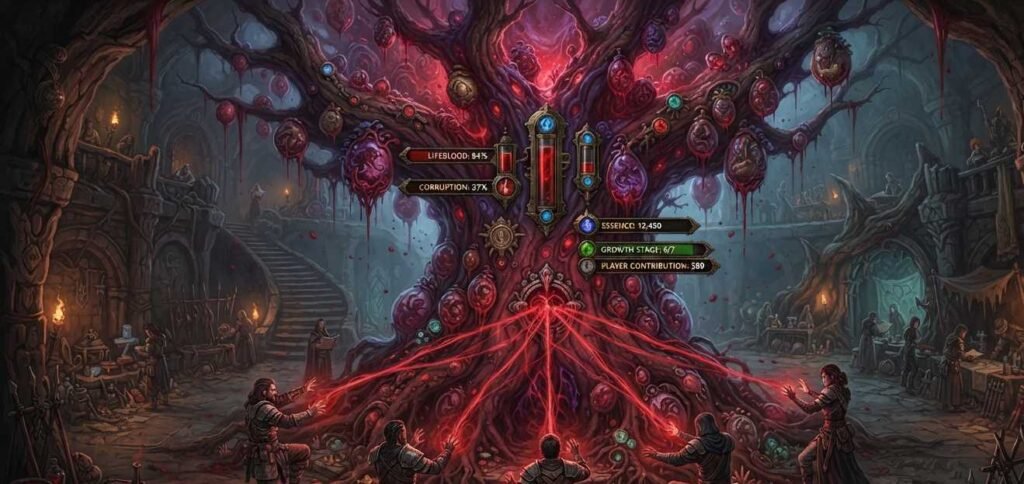
Hiveblood farming only pays off once you spend it, and that spending happens exclusively at the genesis tree poe 2 players find in the Monastery. Any Wombgift poe 2 players collect, dropped from Hive monsters during Colony encounters, gets placed on the Genesis Tree and then fed accumulated Hiveblood, producing a shower of loot whose type depends specifically on which Wombgift was used and how you have allocated the Genesis Tree’s own passive structure.
Why This Drop Actually Changed the Broader Economy
Keepers of the flame poe 2 content existing at all shifted trading patterns specifically because Hivebrain Glands became a way to convert raw currency directly into guaranteed access to loot showers, rather than leaving the entire Keepers of the flame poe 2 chain, finding a Colony, finding good Wombgifts, having enough Hiveblood, up to chance simultaneously. Players who are strong enough to clear the content but unlucky with random Colony spawns can buy their way into consistent access instead.
Wombgift poe 2 items themselves became a secondary market on top of the Hivebrain Gland economy trade, since different Wombgift types produce meaningfully different loot categories. Players optimizing for a specific outcome, crafting materials, specific unique types, currency, will pay a premium for the exact Wombgift that fits their goal rather than using whatever they happen to find.
Quick Checklist — Working the Hivebrain Gland Economy
- Buy Hivebrain Glands through the Currency Exchange if you want guaranteed access without farming for one.
- Target Unstable Breaches and Hive Fortress encounters specifically if you would rather farm your own supply.
- Remember Hiveblood caps at 100,000 and is shared across all characters in your current league.
- Spend accumulated Hiveblood at the Genesis Tree POE 2 hub rather than letting it sit unused past the cap.
- Match your wombgift poe 2 type to your specific farming goal rather than using whichever one you happen to have.
- Watch for Mysterious Wombgifts specifically; they can produce more Hivebrain Glands in a feedback loop.
- Treat Hivebrain Gland economy pricing as a signal of current demand for guaranteed Hive Colony access.
- Consider selling excess wombgift poe 2 stock you do not personally need rather than feeding them all yourself.
The Hivebrain Gland economy is really a story about players paying to remove randomness from a chain that used to have three separate points of luck stacked on top of each other. One guaranteed fragment collapsed all three into a single purchase, and the market responded accordingly.