

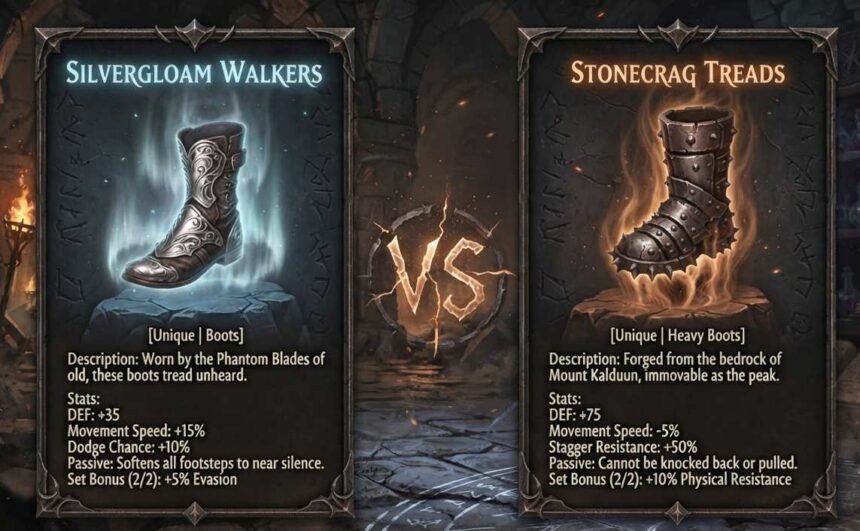
Two boots, two completely different philosophies about what keeps a character alive, and a debate that has run in build forums for years without either side fully convincing the other. Any eternal life build poe players lean toward. Any mobility-first build alike both trace back to this exact question: Soul Tether vs Kaom’s Roots is really a question about whether you want to stop dying by never running out of life to lose, or stop dying by never being slowed down long enough for a hit to land in the first place.
What Soul Tether Actually Offers
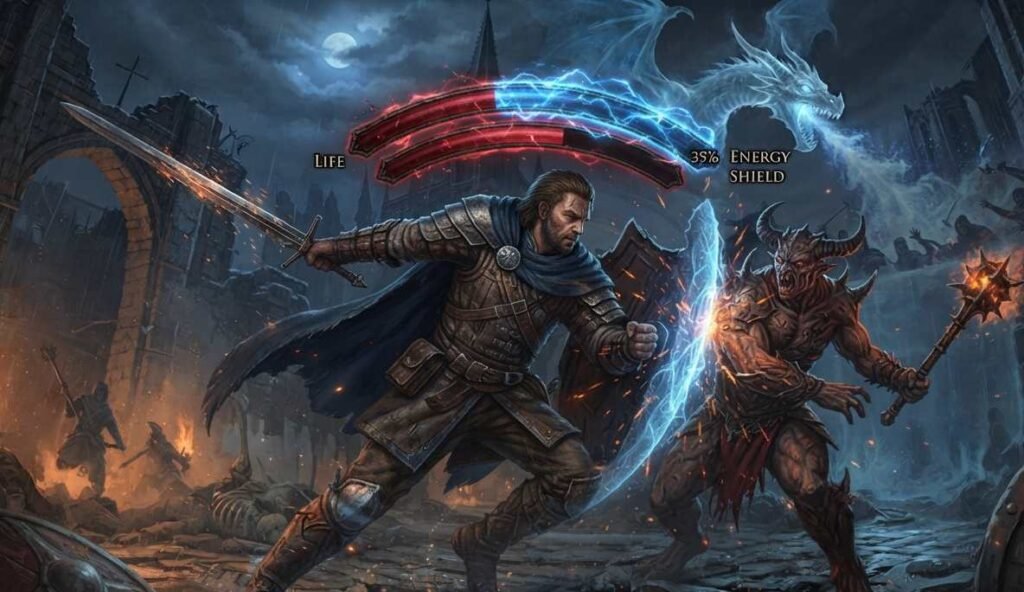
Soul Tether grants the effect of the Immortal Ambition keystone directly through the item, without requiring you to spend a passive tree point on the keystone itself. This is noteworthy clearly: Soul Tether exists as two different items across the two games: an older Path of Exile unique built specifically around enabling hybrid Energy Shield and Life builds, designed to make hybrid ES-Life viable, and a separate, unrelated POE 2 belt that only affects charm duration. This soul tether vs Kaom’s Roots comparison covers the first item, since that is the one the eternal life framing actually describes.
Immortal ambition keystone mechanics built into Soul Tether were specifically designed to make hybrid ES-Life builds viable in a way they previously were not, according to the supporter who created the item. This is the core of es life hybrid poe theorycrafting: a build combining meaningful Life and Energy Shield pools, rather than committing fully to one or the other, gains genuine synergy from this item that neither pure archetype needs on its own.
What Kaom’s Roots Actually Offers

Kaom’s Roots is a unique pair of boots requiring level 68 and 120 Strength, and its two effects solve a completely different problem than Soul Tether does, which is the whole reason a soul tether vs kaom’s roots comparison exists in the first place. Steadfast Stance poe players get from this item grants the same effect as the Determined Stance keystone, immunity to stun, without the tradeoff of losing the ability to evade attacks that normally comes with taking evasion out of your defense entirely, since equipping the item and taking the keystone separately provide no additional stacking benefit.
The second effect prevents action speed from being lower than the character’s default speed due to effects like chill, freeze, or similar slowing effects. Action speed poe mechanics govern more than just movement, covering attack speed, cast speed, and general responsiveness, which means this effect protects your ability to actually keep acting under pressure, not just your ability to walk around the map.
The Actual Philosophical Split Behind Soul Tether vs Kaom’s Roots
Es life hybrid poe builds built around Soul Tether are fundamentally betting on sustain and recovery, accepting that hits will land and concentrating instead on making sure your combined life and energy shield pools can absorb and recover from them repeatedly over a long fight. This is a defensive philosophy built around persistence rather than avoidance.
Kaom’s Roots represents the opposite bet entirely: staying functional and mobile regardless of what debuffs an enemy tries to apply to you, on the theory that a character that never gets slowed, stunned, or otherwise locked down has fewer opportunities to actually take the damage that a sustain-focused build is planning to absorb. Eternal life build poe theorycrafting usually favors Soul Tether specifically for slower, more methodical playstyles. In contrast, Kaom’s Roots suits builds that rely on constant repositioning and cannot afford to be caught standing still.
Soul Tether vs Kaom’s Roots: Which One Actually Fits Your Build
Choose Soul Tether if your build already invests meaningfully in both Life and Energy Shield rather than committing entirely to one, since the item’s value comes specifically from that hybrid investment paying off in a way neither pure archetype accesses. A build that is not already structured around a hybrid pool gets comparatively little from this item relative to a more standard defensive layer choice.
Choose Kaom’s Roots if your build relies on consistent movement and action speed poe mechanics to function, especially melee builds, where being slowed or stunned at the wrong moment does not just reduce your damage output; it can end the fight entirely. The stun immunity alone is worth serious consideration regarding any build that has been repeatedly interrupted mid-combo by an enemy’s crowd control.
Neither item is a universal upgrade over the other in the soul tether vs Kaom’s Roots debate, and treating this as a simple tier list question misses the actual point of the comparison. They solve different problems for different build philosophies, and the honest answer to which one is better depends entirely on which failure mode your specific character actually dies to more often.
Quick Checklist — Choosing Between Soul Tether and Kaom’s Roots
- Confirm you are looking at the correct Soul Tether; the classic item differs completely from the unrelated POE 2 belt of the same name, and only the classic version grants the immortal ambition keystone effect.
- Choose Soul Tether specifically if your ES life hybrid poe build already invests in both Life and Energy Shield meaningfully.
- Choose Kaom’s Roots if consistent movement and action speed PoE mechanics matter more to your build than raw sustain, or you specifically need steady stance poe stun immunity.
- Remember, steadfast stance poe mechanics built into Kaom’s Roots grant stun immunity without the usual evasion tradeoff.
- Consider Kaom’s Roots seriously if your build gets interrupted mid-combo by crowd control often.
- Do not treat this as a simple tier list question; the two items solve genuinely different problems.
- Match the item to your build’s actual failure mode, not to a generic ranking you found online.
- Revisit any eternal life build poe or mobility-focused choice if your build’s defensive investment shifts meaningfully between Life, Energy Shield, and mobility.
Soul Tether vs Kaom’s Roots is not a debate with a correct winner sitting somewhere underneath the argument. It is two different answers to the same question, and the right one depends entirely on which kind of death your specific build actually needs to prevent.